You know what an offshore wind turbine looks like. A giant pole, three blades, bolted to the seafloor. The catch is it only works in shallow water, around 80 meters or less. That rules out most of the ocean, which is where the strongest, steadiest winds actually are.
A Swedish company called SeaTwirl thinks it has the fix. Turn the turbine on its side, float it, and flat-pack the whole thing like an IKEA bookshelf. No crane. No specialized machinery. It doesn't, sadly, come with a side of meatballs.
Here's the thing. Vertical axis turbines like this have been losing to horizontal axis turbines for decades. The biggest one ever built lasted five years before it broke. So is SeaTwirl a real breakthrough, or a century-old dead end in a flat-pack box?
When I say there are things about SeaTwirl that are Ikea-like, I'm not suggesting these wind turbines come with paper instructions and an interior design argument with your partner. SeaTwirl is Ikea-like because it’s designed to be easy to move, easy to set up, and easy to operate.
Let's start with set up. SeaTwirl's turbines are made for deep water, but they are assembled on the ground, in pieces. They come in a "flat pack" just like your beloved Tonstad table. Keeping it 2D, SeaTwirl's turbine can be put together on the ground, like ALL THE WAY on the ground. I've seen wind turbines getting put together, and they usually require these massive cranes. In theory, this should make SeaTwirl cheaper to get onto the water.
The turbine is also designed to make things easier out at sea. Most wind turbines have their engines at the top, in the massive engine housing called the nacelle. The workers who repair turbines in the north sea use cage elevators or climb 100 meters to get into the nacelle for maintenance. Sometimes they'll even get dropped off in a helicopter. SeaTwirl eliminates all this, by housing the engine at sea level. That should make maintenance easier, cheaper, safer, and less exciting.1
It makes a lot of sense for SeaTwirl to find a way to make sea based wind power cheaper. We're in the middle of a gold rush for wind power. A wind rush. All over the globe, wind is being built faster and cheaper than new fossil fuel. It’s already keeping the lights on for more than 937 million households.2
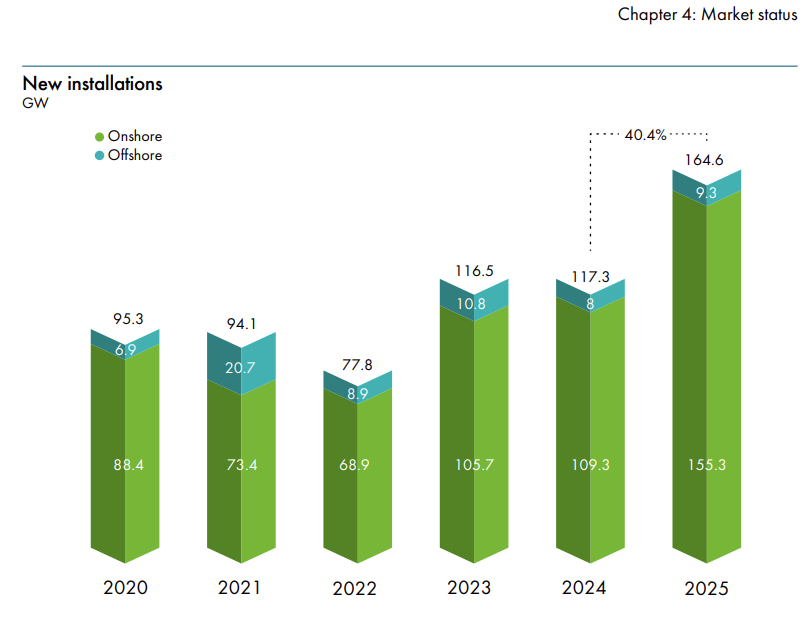
In 2025, wind contributed 205 TWh of power. That's an 8.2% increase over 2024, making it the second fastest growing source of renewable energy. What’s interesting is that almost all of the wind used was harvested on land. Only a small percentage of installations over the last 5 years have been offshore turbines, leaving a gap of untapped ocean wind almost as big as the one between the doors of that buffet cabinet I tried to put together last year.32
I talked in this previous video about how offshore wind makes sense because energy generated from wind power isn’t linear. Small changes in wind speed can cause huge jumps in productivity. That’s why strong offshore winds are so appealing. The steady, stronger winds on the ocean can allow for huge amount of energy production compared to onshore. The DOE estimated that harnessing just 1% of the ocean wind could produce enough power for 6.5 million US homes. 4 That's the wind challenge SeaTwirl is trying to tackle, and the wind rush it's trying to take advantage of.
Floating Vertical Approach
Despite the Ikea like focus on making things easy, SeaTwirl is taking, in some ways, a more difficult path.
There are three major categories of offshore wind generation, and SeaTwirl is taking the least proven (but potentially promising route). The most common type of wind turbines are fixed bottom horizontal-axis. Let's start with the fixed bottom part. These can only be used in shallower waters with a maximum depth of around 60-80 meters because like the name says, they need to be fixed to the bottom of the ocean. When you think about wind turbines, this is probably what you're imagining.5
The other types are floating horizontal-axis, and floating vertical-axis.6
Floating turbines, can be used in deeper water of 100 meters or more. But that doesn’t mean they can be used in the middle of the open ocean. Floating turbines still need to be tethered to the sea floor, and they require cables that can export the electricity back to shore.7 This still somewhat limits how far out these floating turbines can be placed at sea.
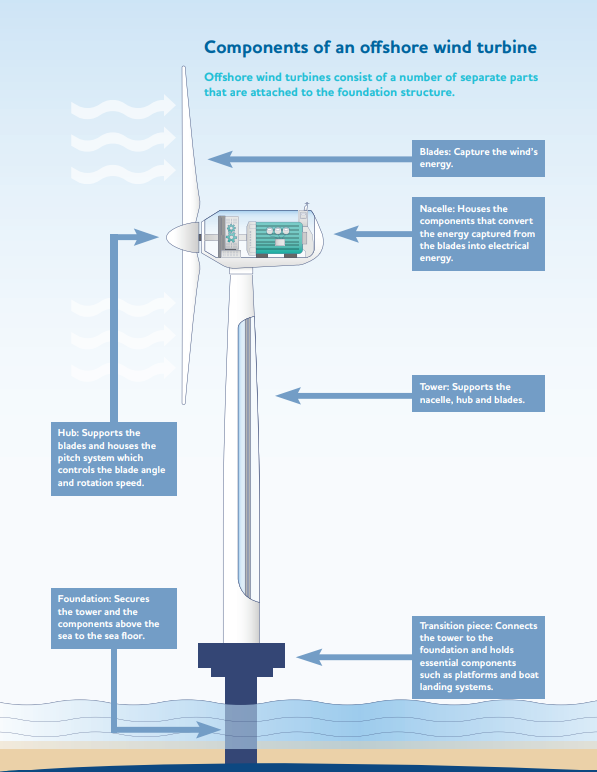
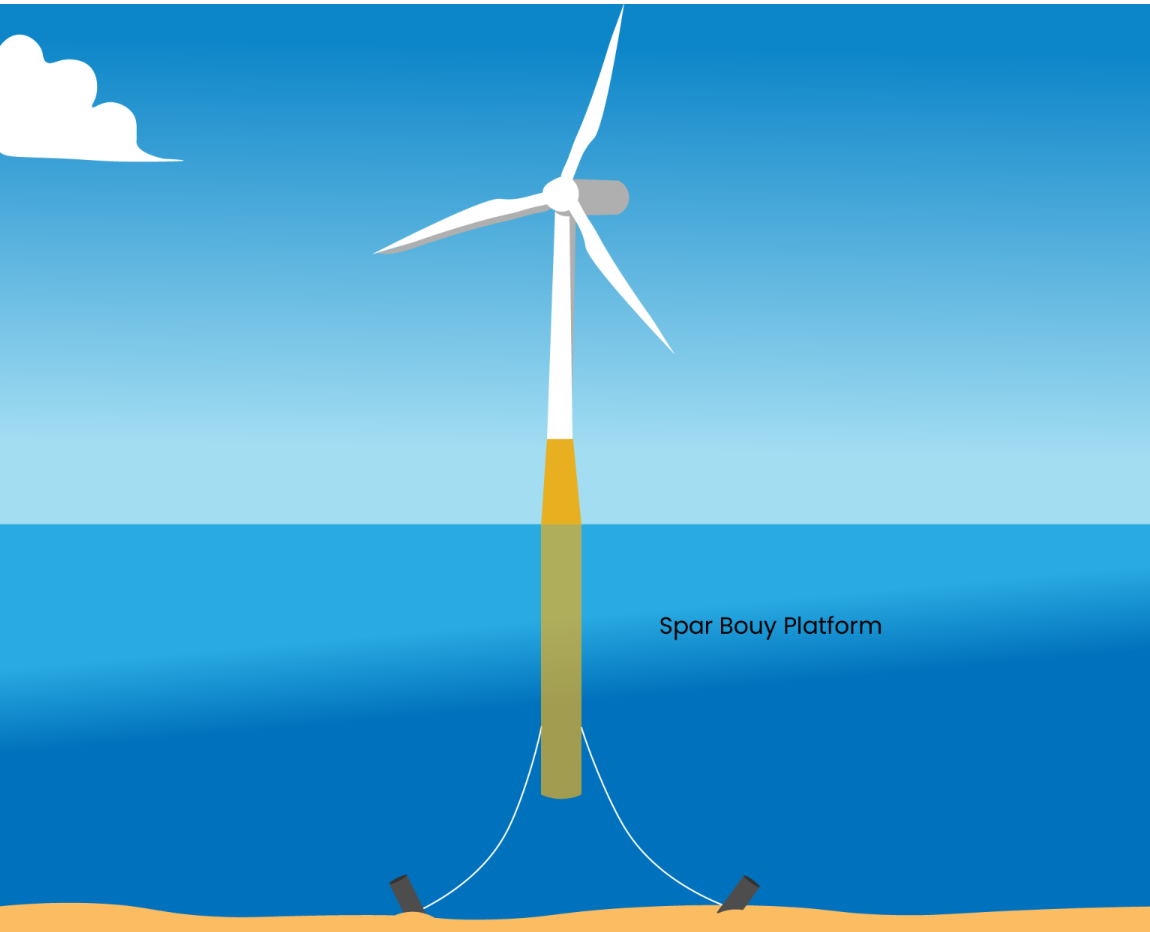
SeaTwirl is one of these floating turbines, and it utilizes a Spar foundation,87 which is this large, cylindrical, semi-submerged structure. The bottom is tethered to the sea floor using mooring lines. This design makes it less reactive to external forces like currents, winds, and waves. Spar foundations are large, so they’re only applicable to water depths of 100 meters or more. They tend to be difficult to keep upright when being moved through shallow water. 6
Now let's talk about this axis business. The most familiar wind turbines have a horizontal-axis design, or HAWTs. These are the one that look like a pole with an airplane propeller at the top. They harness the wind energy from the “propellers,” which are situated vertically to the ground. 9 The horizontal refers to the orientation of the nacelle and how the drivetrain spins, which is horizontal and parallel to the ground. These turbines are more efficient, but are not without their flaws.
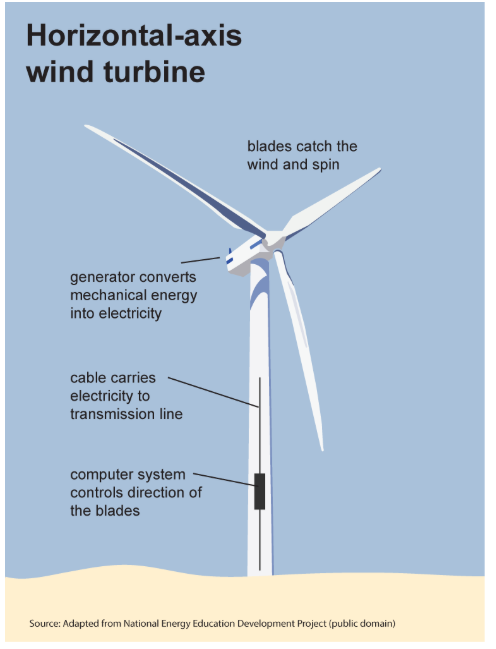
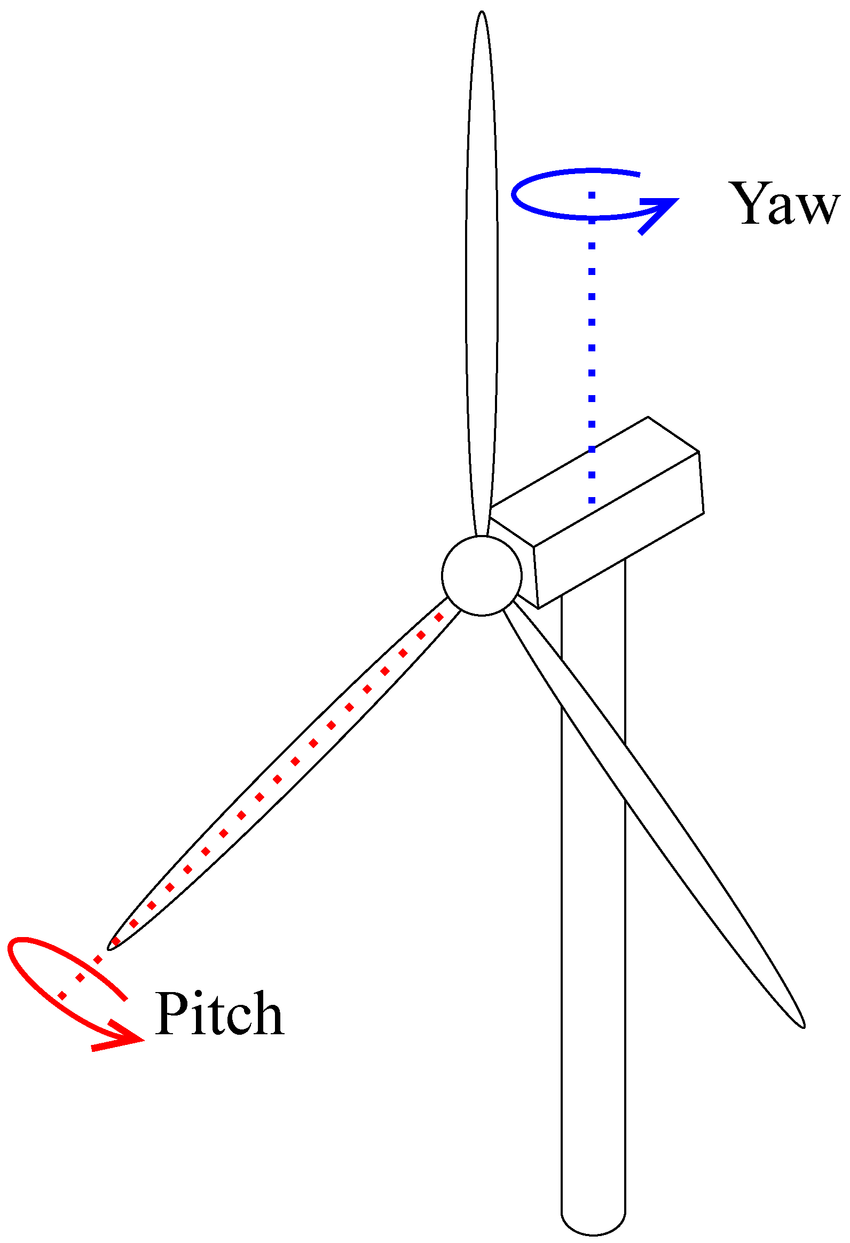
Their efficiency relies in part on pitch and yaw systems that allow the blades to orient towards the oncoming wind to capture as much energy as possible. The pitch system adjusts the blades, while the yaw system adjusts the orientation of the entire nacelle (propeller and associated components) to face the wind. 10 While these systems improve efficiency, they have complex parts that require maintenance. They can also contribute to the noise pollution associated with wind turbines.11
Vertical-axis wind turbines like SeaTwirl, also known VAWTs, operate on the same premise: collect kinetic wind energy and turn a drivetrain to generate electricity. However, the blades on the VAWTs are orientated perpendicular to the ground, spinning in line with the central post vertically. This design is great in situations where the wind is either very strong or coming from different directions. Vertical-axis turbines do not need pitch and yaw systems, making them quieter, smaller, and easier to maintain.89
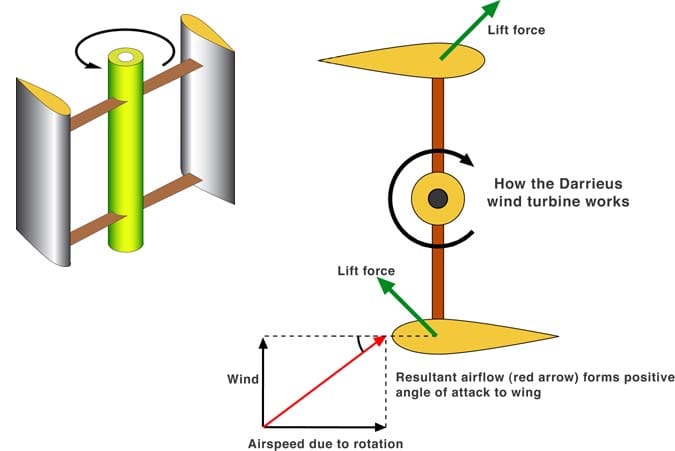
However, there’s a reason we still see a lot more horizontal-axis turbines despite the could-be-better pitch and yaw systems. Vertical-axis turbines are around 25% less aerodynamically efficient than HAWTs in the same conditions. 12 They also have lower starting torque … and there's a bigger issue. Most of the rotating mass sits out at the blades, not at the hub. That puts huge centrifugal stress on the whole structure. To survive it, every part has to be heavier and beefier.13 Historically, they also have fatigue prone main bearings that limit their long term usefulness. 14 A typical geared HAWT has around 26 sets of bearings, and a VAWT might only have 4 sets, meaning there are fewer failure points. 14 For example, the largest VAWT ever built, the 3.8 MW Éole turbine in Canada, was only in operation for 5 years before fatigue failures. 15 These are the exact challenges SeaTwirl has to overcome to be a success.
Based on those stats, it makes sense that horizontal-axis wind turbines are more widely used than vertical-axis turbines on land. But is there a place for vertical-axis turbines in the offshore sector? If so, what makes VAWTs like SeaTwirl more practical in this context?
For one thing, floating HAWTs have a higher failure rate than their land-locked counterparts. 26-28% higher. More failure means more downtime and maintenance, making VAWTs seem more sensible. A Japanese study comparing floating VAWTs and HAWTs found the VAWT came out about 3.7% cheaper per unit of energy, 140 versus 145 euros per megawatt-hour.16 So the conversation becomes more about long-term maintenance and costs. SeaTwirl trades efficiency and hopes to make up for it in reduced maintenance.
So with all these potential benefits and drawbacks, how does SeaTwirl actually stack up?
We'll get to that in a second.
Let’s dive a little deeper into how vertical axis wind turbines evolved over time, and why they are seeing a resurgence with the development of offshore wind farming.
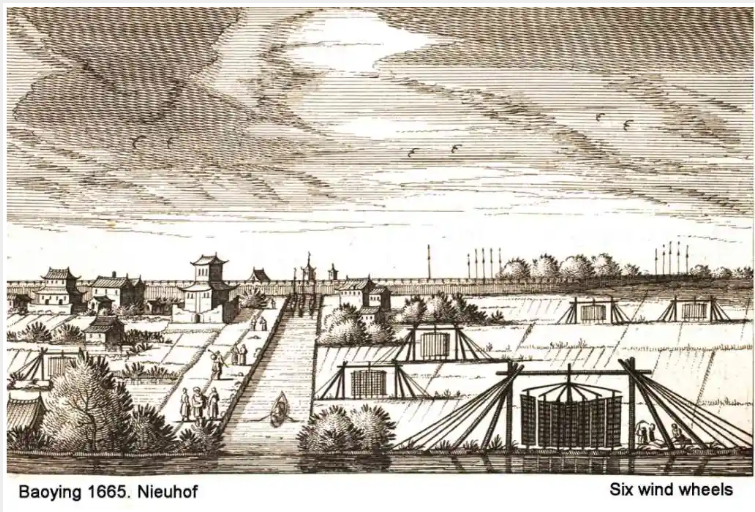
Wind wheels were used in China from as early as the 25-220 CE to pump water and were used up until the 1950’s when electric pumps took over. 17 Persians used vertical-axis turbines to grind grain and assist in irrigation since the 10th Century. 18
In more modern times, James Blyth built what is often credited as the first VAWT to generate electricity. 17
The next big breakthrough came from the French aeronautical engineer, Georges Darrieus. He patented what is now called a Darrieus wind turbine in October of 1926. This design uses curved blades mounted around a rotating shaft. This design allows the turbine to utilize wind coming from any direction. One problem with this design is that as the blades spin, they are only experiencing the maximum amount of force from the wind at two points throughout the rotation. 13
There was little research or advancement in VAWTs from Darrieus until the 1970’s. 18
More modern designs in VAWTs include H-Rotor turbines, or giromills. H-rotor turbines are a form of Darrieus turbines that use flat blades rotating around a central shaft rather than the curves blades of the standard Darrieus turbine. The DOE researched giromill structures in the late 1970s 19 before turning their research to floating Darrieus turbines in the 2010s, research that is still underway at Sandia National Labs. 1920
So I already talked about how VAWTs are less efficient than their HAWT counterparts in like-for-like conditions, and how they historically had high fatigue issues.
So what do we know about how SeaTwirl operates in the world, right now? Probably not enough to come to a firm conclusion.
SeaTwirl's progress has been as choppy as the waves of the North Sea. Their first generation 30 kW S1 turbine was installed off Lysekil, Sweden in 2015, and remains in deployment. It has withstood hurricane force winds as well as harsh autumn and winter storms. It’s connected to the grid and is being tested according to plan. 821 However, due to the nature of the project, SeaTwirl does not have any publicly available LCOE data on this deployment. According to an external source, SeaTwirl has previously claimed that the LCOE on their design is 20% lower than conventional floating HAWTs, and a wind farm of SeaTwirl turbines could eventually produce electricity at a price of around 50 euros per MWh. That's good … but we'll need the data to know for sure. 4
Their 1 MW S2x test was targeted for installation in 2020, but the METCenter withdrew their license in 2026 before the project was ever put in the water, citing changes in project framework. The test site was a fish farm in deep water just 700 m off the coast of Norway, not an open ocean environment. 222324 SeaTwirl secured a grant from Horizon Europe to deploy a 2 MW demonstration project, “Verti-Go,” without completing the 1 MW intermediate. The project is slated to run through the end of September 2029. When it's over, we'll know a lot more. 2526
In addition to their claims of reducing costs and maintenance, SeaTwirl claims that “Floating turbines offers greater flexibility and reduces risk of conflicts with other ocean industries.” 27 But is it really that simple? “Deeper waters” doesn’t equate to “no impact.” How could wind farms in deeper waters affect industries like fishing, tourism, and shipping routes? Could it affect the migratory paths of sea animals? The jury is still out.
Right now SeaTwirl's market is hypothetical. Their main focus is the wind farms that might provide 7-11% of Europe’s electricity from offshore wind by the end of the decade. They're also focused on industries operating at sea or near the ocean, including generating electricity for oil rigs that currently rely on generators for most of their power. 28 I know, I know, but every little bit helps right? If we can stop burning fossil fuels while drilling for fossil fuels, at least we aren’t using it up as fast?
Another potential “at sea” use is the generation of electricity for fish farms to power feeders, pumps, and other equipment. 28
Other niche applications according to their website include generating clean energy for islands and remote locations (think isolated fishing villages).28
So, does SeaTwirl really have what it takes to make a dent in untapped deep water wind energy? I’m skeptical, but I want to keep an eye on them. If they can consistently deliver the results they claim, they may fill a niche for offshore energy generation in deep waters close to land. The real question is whether historical failure modes in conjunction with the lower aerodynamic efficiency of VAWTs can really out compete floating HAWTs, even with the higher HAWT failure rates in the offshore sector.
- What it’s like to repair wind turbines — 50 miles out at sea ↩
- Global Wind Energy Council: 2026 Global Wind Report ↩
- Ember: Global Electricity Review 2026 ↩
- Computing America’s Offshore Wind Energy Potential ↩
- https://www.oir.gov.au/sites/default/files/Offshore Wind Energy Brochure.pdf ↩
- Empire Engineering: Semi-Submersible, Spar and TLP – How to select floating wind foundation types? ↩
- Hywind Scotland ↩
- SeaTwirl: Our Technology ↩
- Windpower Engineering & Development: Vertical Axis Wind Turbines vs Horizontal Axis Wind Turbines ↩
- Emerson: Wind Turbine Pitch Control ↩
- Siemens: Not in my backyard! How annoying is wind turbine noise? ↩
- Research Gate: Comparison between horizontal and vertical axis wind turbine ↩
- Wikipedia: Darrieus wind turbine ↩
- MDPI: Failure Mechanisms of Main Bearings in Vertical-Axis Wind Turbines: A Comparative Review ↩
- ScienceDirect: A historical review of vertical axis wind turbines rated 100 kW and above ↩
- Economic assessment of floating wind power: comparing horizontal and vertical axis turbine concepts in a Japanese offshore context ↩
- Historic Vertical Axis Wind Machines: Lessons for Sustainable Energy ↩
- A review on the historical development of the lift-type vertical axis wind turbine: From onshore to offshore floating application ↩
- OSTI.gov: Giromill Overview ↩
- Sandia National Labs: VERTICAL-AXIS WIND TURBINES FOR OFFSHORE WIND ENERGY ↩
- SeaTwirl: Proof of Concept ↩
- METCentre withdraws license for SeaTwirl's floating wind turbine ↩
- SeaTwirl S2 Floating Wind Farm ↩
- SeaTwirl’s vertical-axis floating offshore wind turbine set for tests off Norway ↩
- SeaTwirl: Verti-Go project officially launched in October ↩
- CORDIS: Demonstration of a VERTIcal-axis floating wind turbine for offshore energy Generation with improved performance and accessibility for Operation & maintenance ↩
- SeaTwirl: Offshore Wind ↩
- SeaTwirl: Our Markets ↩